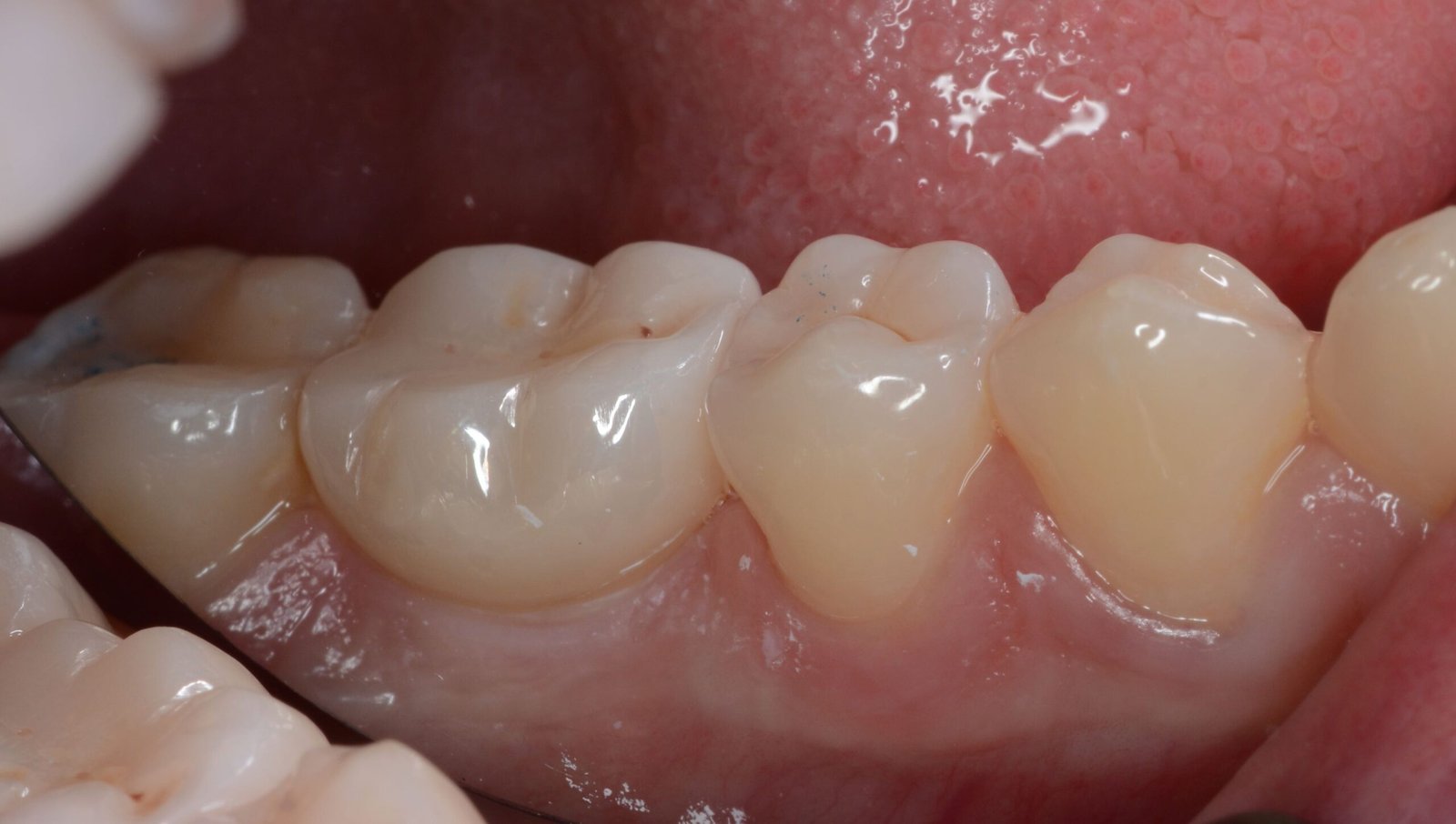
Zirconia. The standard there is no going back from
No metal. No dark gingival line. No ceramic chipping. Biocompatible, translucent and with superior mechanical strength. At BDL we work with the most demanding zirconia materials on the market.
Why zirconia has replaced metal-ceramic
For decades, metal-ceramic fixed prosthetics was the reference standard. Zirconia has displaced it for technical, biological and aesthetic reasons that are here to stay.
No dark gingival line
Metal-ceramic's metal substructure creates a dark shadow at the gingival margin over time. Zirconia is white and translucent — the margin blends with the tissue.
Total biocompatibility
Zirconium oxide is chemically inert. No inflammatory response, no risk of metal allergy, no interference with imaging diagnostics.
No ceramic chipping
Porcelain on metal fails by delamination. Monolithic or surface-veneered zirconia restorations eliminate this structural risk entirely.
Superior mechanical strength
Yttrium-stabilised zirconia flexural strength makes it suitable even for full-arch frameworks on implants under high occlusal load.
Non-porous surface
Once sintered, zirconia is completely smooth and non-porous. Minimal plaque accumulation, frictional behaviour equivalent to natural enamel.
Documented longevity
More than 25 years of accumulated clinical evidence. Long-term survival rates of monolithic zirconia consistently exceed those of conventional metal-ceramic.
Prettau Zirconia and DMAX SMART — two informed choices
Not all zirconias are equal. Material selection determines aesthetic outcome, structural strength and clinical suitability. At BDL we work with two high-performance references, each with its optimal indication.
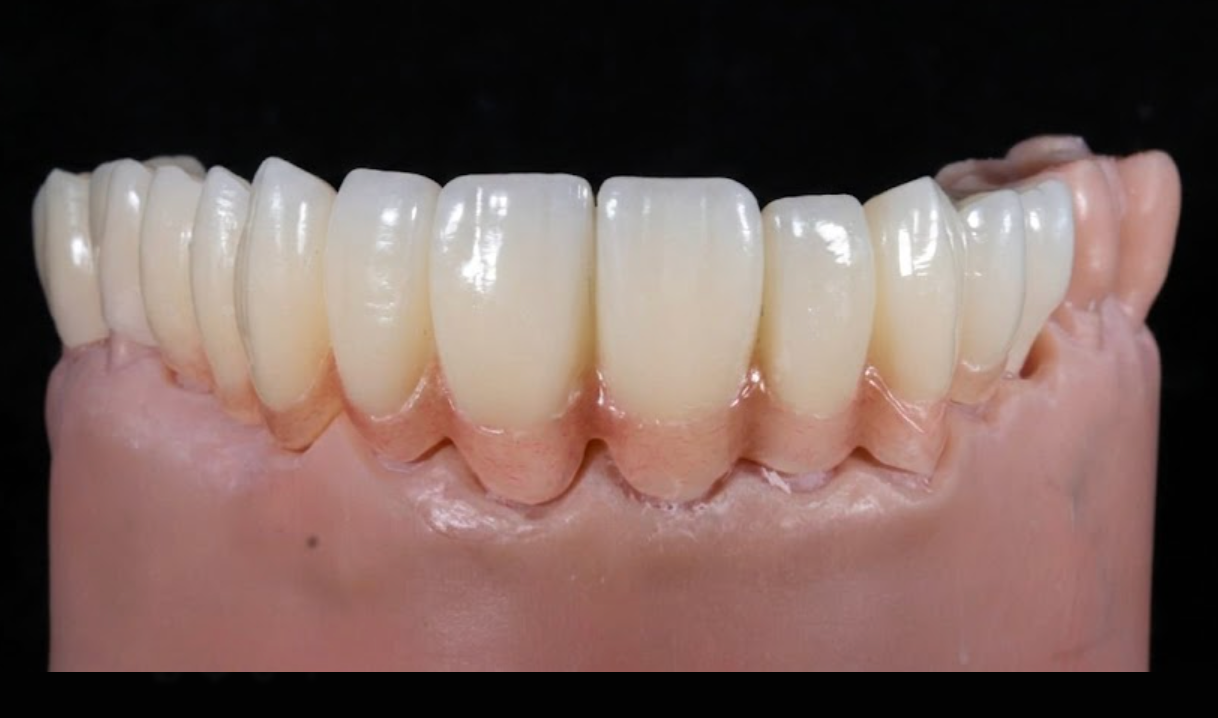
Upper jaw rehabilitation · 12 zirconia crowns with pink ceramic · on working model
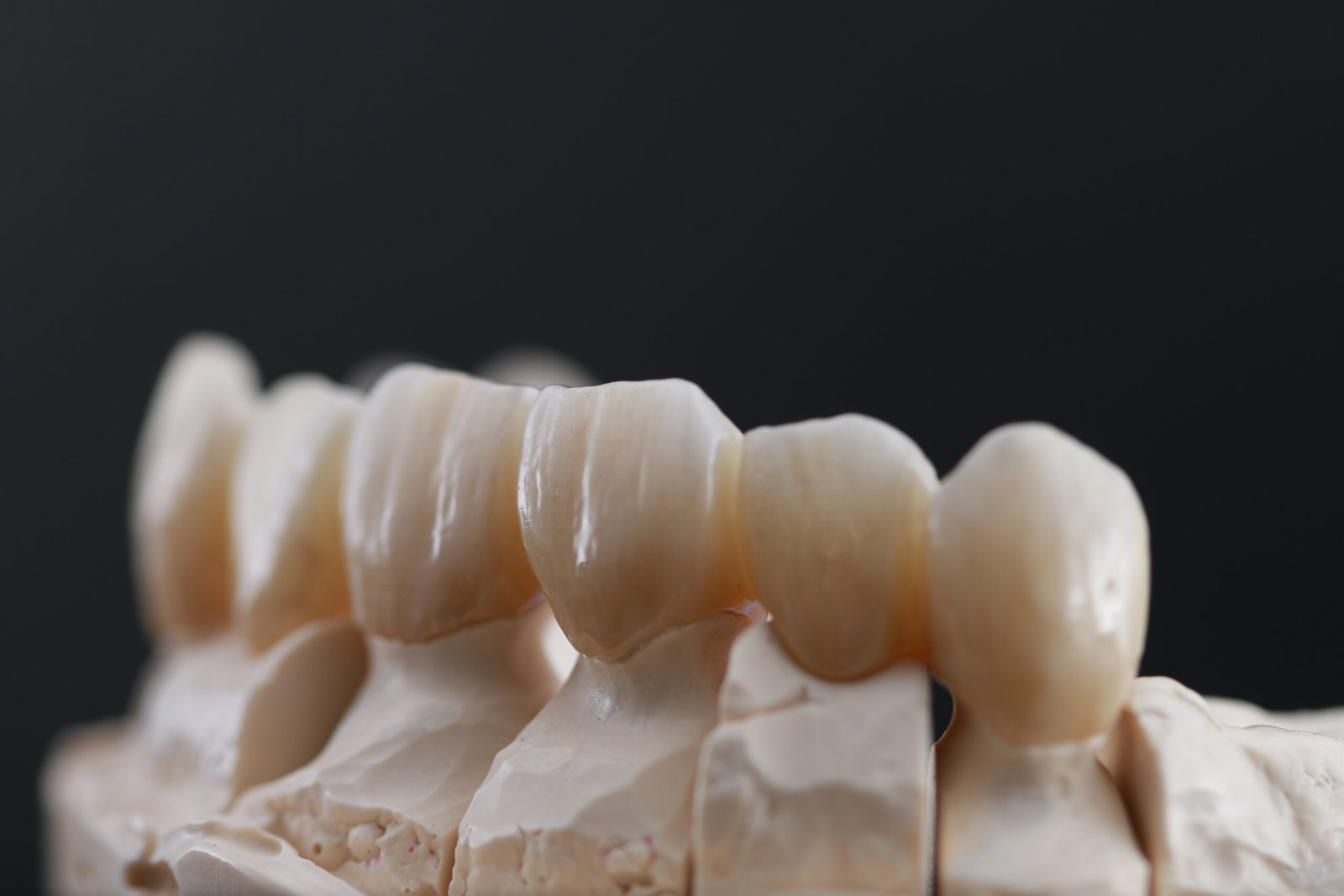
Zirconia bridge on implants · teeth 13–23 · on laboratory model
Prettau®
Zirkonzahn's reference material. High translucency and perfectly natural appearance thanks to its optimised microstructure. Non-porous, no chipping, no antagonist wear. Indicated for single crowns, large bridges and complete frameworks on implants.
Prettau® 3 Dispersive®
Simultaneous triple gradient of colour, translucency and flexural strength within the same block. The cervical zone is stronger and more opaque; the incisal edge, more translucent and aesthetic. One material to handle the entire mouth.
Prettau® 4 Anterior®
Extreme translucency for the anterior sector. 670 MPa flexural strength (University of Pennsylvania). Polychromatic before sintering: without the aesthetic limitations of glass-ceramic. Direct alternative to lithium disilicate for highly aesthetic demanding cases.
SMART Multilayer
Universal white disc with 7 layers of differential dye absorption. A 15-second dip in the colouring liquid generates the full VITA shade scale gradient. 1,100 MPa flexural strength — suitable for all indications, from single crowns to full mandibular rehabilitations.
What we manufacture in zirconia
Single crowns
Anterior and posterior sector. Monolithic or with selective veneering. High-precision marginal fit by CAD/CAM milling.
Multi-unit bridges
Up to 14 elements in conventional frameworks. Connector calculation using Zirkonzahn software to guarantee structural strength.
Implant-supported frameworks
Custom abutments, implant-borne crowns and screw-retained or cemented superstructures. Compatible with all implant systems.
Full-arch monolithic frameworks
Full arch total rehabilitation in zirconia. Prettau and DMAX SMART allow 12–14 unit frameworks without compromising mechanical strength.
Inlays, onlays and veneers
High-aesthetic partial restorations. Prettau 4 Anterior as a direct alternative to lithium disilicate with greater mechanical strength.
Rehabilitation with pink ceramic
Artificial gingival reconstruction in ceramic on a zirconia framework. Indicated in rehabilitations with soft tissue or bone loss.
From the laboratory to the patient's mouth
The precision of CAD/CAM milling and correct material selection translates into restorations the patient cannot distinguish from their natural teeth — and the clinician has no hesitation placing.
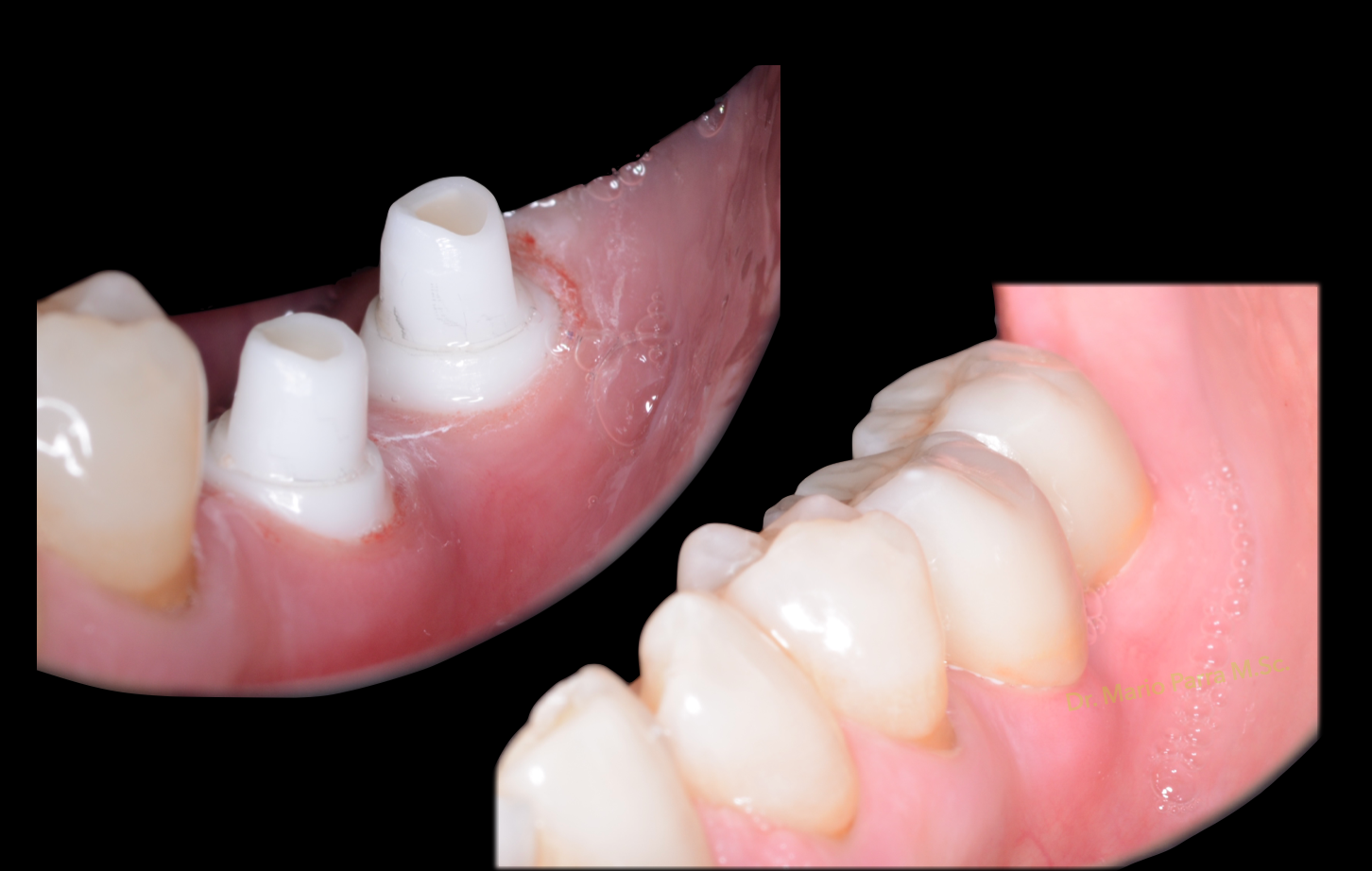
Zirconia crowns on implants in region 36–37 · Before and after placement · Clinical intraoral photograph
Tell us what the patient needs
Anterior or posterior sector, implant or tooth-supported, high aesthetic demand or maximum strength — we select the right zirconia for each case.